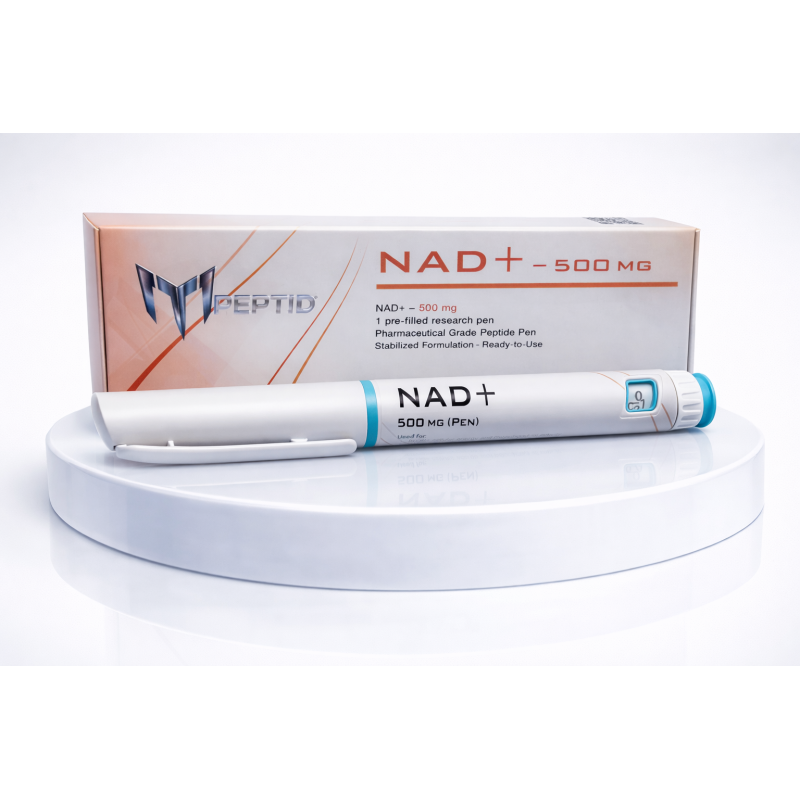
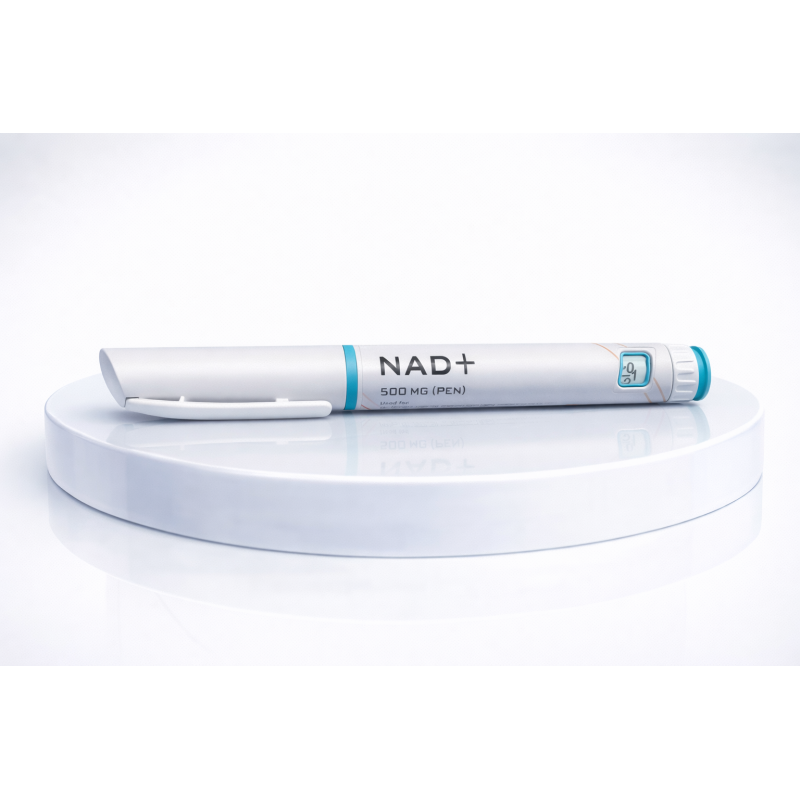
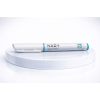
NAD+ is a coenzyme involved in energy production and cellular metabolism. Increases endurance and mental focus, reduces fatigue. Used by athletes and fitness enthusiasts for better adaptation to training load. Supports anti-aging programs and recovery cycles.
- 0%
- 0%
- 0%
- 0%
- 0%
Report this review.
What is NAD+?
NAD+ helps cells produce and manage their energy more efficiently and better cope with the "stress" of workload and aging by providing them a key building block for their internal processes.
In a biomedical context the molecule belongs to the pyridine-nucleotide coenzymes and participates directly in redox signaling/metabolic pathways, where it alternates between oxidized and reduced forms (NAD/NADH) and thus links energy metabolism with cellular signaling (overview: Wikipedia: Nicotinamide adenine dinucleotide).
Mechanism of action (research framework)
NAD+ is an essential electron carrier for glycolysis, the Krebs cycle and oxidative phosphorylation; the NAD+/NADH ratio influences metabolic flux and mitochondrial function. Besides the redox role, NAD+ is a substrate for NAD-dependent enzymes (e.g., sirtuins and PARP), which regulate transcription, DNA repair and cellular adaptation to stress. This places the peptide at the center of axes such as SIRT1–PGC-1α and the PARP-mediated response to DNA damage (source: PubMed Central (review articles on NAD+).
Preclinical/clinical data
| Study name | Population or experimental model | Number of subjects or samples | Duration | Key observed outcomes |
|---|---|---|---|---|
| Human oral NR trial (Trammell et al., 2016) | Healthy adults | n=12 | 9 days | Whole-blood NAD+ increased ~2.7× vs baseline at the highest dose; no numeric clinical endpoints reported |
| Randomized trial of NMN (Yoshino et al., 2021) | Postmenopausal women with prediabetes | n=25 | 10 weeks | Insulin-stimulated glucose disposal increased vs placebo (reported improvement; study presents numeric clamp endpoints) |
Note: Published human data are mostly for precursors (NR/NMN), and not for directly applied NAD+. According to official sources, translating effects to exogenous NAD+ requires careful experimental design (sources: NEJM, PubMed).
Context of scientific use
In the laboratory environment NAD+ is used as a standard/coenzyme in enzyme activities (dehydrogenases), in tests for mitochondrial function, PARP/sirtuin activities, calibrations for LC–MS/UV and as a control in models of metabolic stress. In the clinical/translational setting it is more often monitored as a biomarker (NAD metabolome) and in interventions with precursors, due to limitations in the stability and cellular transport of the molecule itself.
Pharmacokinetics (for experimental design)
As a polar dinucleotide, exogenous NAD+ has limited membrane permeability; in cellular experiments conditions for transport/hydrolysis (e.g., ectoenzymes) are usually planned and intracellular pools are measured by LC–MS. In in vivo models it is critical to define the matrix (blood/tissue), sampling time and analytical method, since metabolism to nicotinamide/nucleotides can dominate the observed signal.
Purity and specification
NAD Plus from MyPeptid provides a reliable basis for reproducible biochemical assays, as it has a purity >99% (HPLC) and batch control, which minimizes background signals in enzyme and mass-spectrometric analyses.
Formula: C21H27N7O14P2
For sale for educational and research purposes only and is not intended for diagnostic, therapeutic or clinical use.