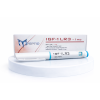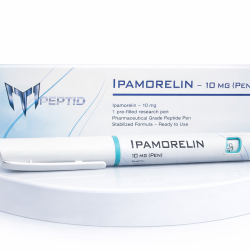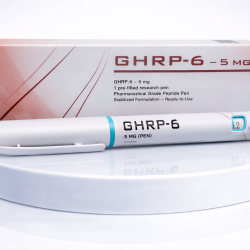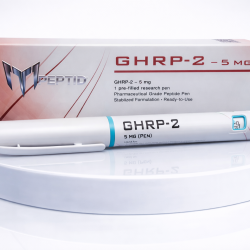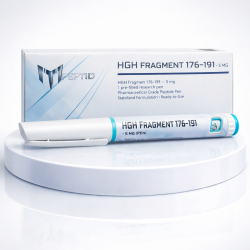
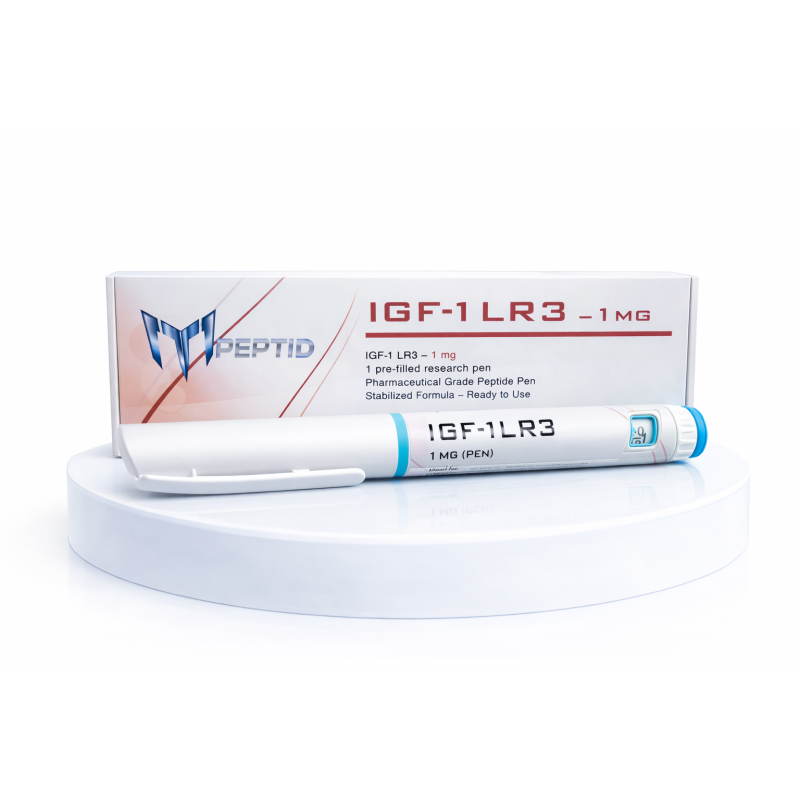
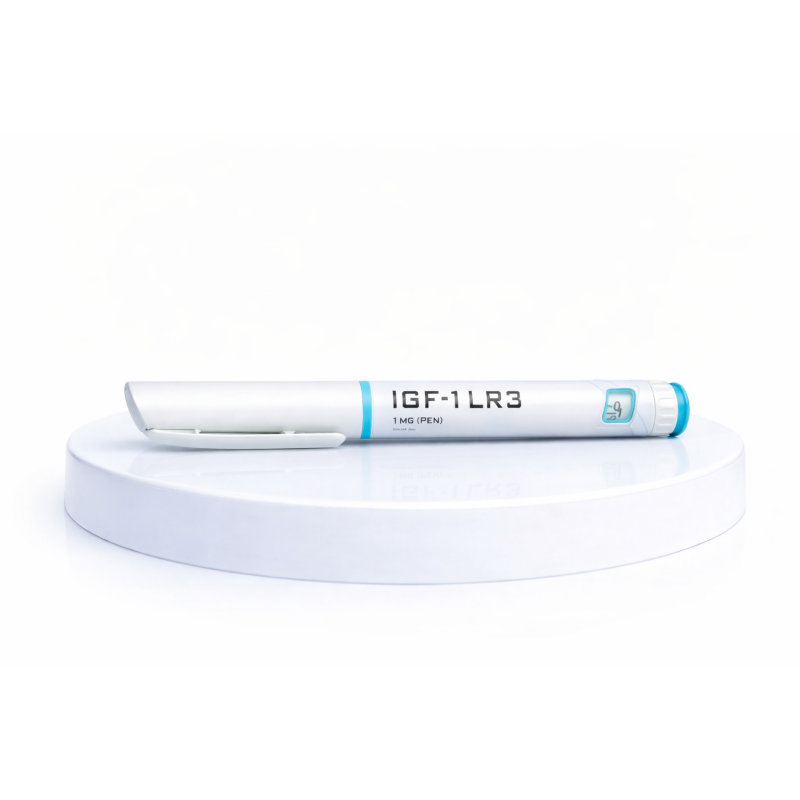
IGF-1 LR3 activates cellular growth and regeneration. It improves recovery and the nutrient efficiency of muscles. Used in sports and bodybuilding for better muscle volume and density. It is combined with peptides supporting growth hormone and a proper nutritional regimen.
- 0%
- 0%
- 0%
- 0%
- 0%
Report this review.
IGF‑1 LR3 (research-only): scientific profile for laboratory use
This peptide acts as an "amplifier" of the signals that tell cells to grow, recover, and use nutrients more efficiently, making those signals stronger and longer-lasting in the body.
As an analogue from the molecular class of insulin-like growth factors, a modified variant of IGF‑1 activates the IGF‑1R receptor (a tyrosine kinase) and the downstream PI3K–AKT–mTOR and RAS–RAF–MEK–ERK signaling pathways, making it a relevant tool for modeling anabolic and proliferative responses in vitro and in vivo (Wikipedia: IGF‑1; NCBI Bookshelf: IGF‑1/IGF‑1R overview).
Mechanism of action
Structural modifications (extended N-terminus and amino acid substitution) have been used experimentally to reduce binding to IGF‑binding proteins and to extend functional exposure compared to native IGF‑1, with the expected effect: longer activation of IGF‑1R and more stable cellular responses in cultures and animal models. In the context of experiment design this means a wider window for time‑course measurements of phosphorylation (AKT/ERK), protein synthesis and metabolic readouts.
Clinical/preclinical data (limited for LR3)
Published clinical data are mainly for recombinant human IGF‑1 (mecasermin), not for LR3; for LR3 the available results are primarily preclinical and heterogeneous, which limits direct quantitative generalizations.
| study name | population or experimental model | number of subjects or samples | duration | key observed outcomes |
|---|---|---|---|---|
| EU label/assessment: mecasermin (rhIGF‑1) | patients with severe primary IGF‑1 deficiency | NR | NR | NR (LR3 is not the subject of the assessment) |
Source for regulatory context of IGF‑1 therapy (not LR3): EMA: Increlex (mecasermin).
Context of scientific use
Typical applications: cell lines for IGF‑1R signaling, differentiation/hypertrophy models, tests for receptor specificity and cross‑talk with the insulin receptor. Not intended for clinical use; to be used only in a controlled laboratory environment with validated biosafety and QA procedures.
Pharmacokinetics (for experimental design)
LR3 is often chosen when longer exposure and less frequent dosing are needed in animal protocols; in cell systems serum-free/low-serum windows and control conditions for IGFBPs and insulin are planned to minimize confounders.
Purity and formula
IGF‑1 LR3 from MyPeptid provides ideal conditions for testing and laboratory research because it has purity over 99% (typically confirmed by HPLC/MS), suitable for reproducible bioassay results and batch-to-batch calibrations.
Formula: C990H1526N262O300S7
Sold for educational and research purposes only (research-only); it is not a medicinal product and is not intended for use in humans or animals.