
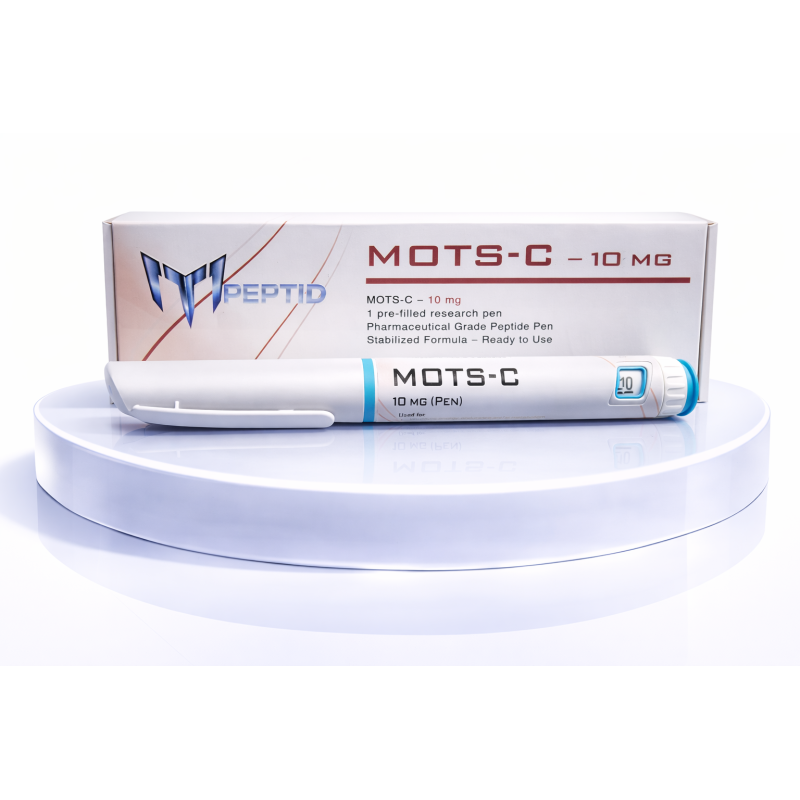

MOTS-c improves mitochondrial function and glucose metabolism. It increases endurance and helps with physical loads, by optimizing energy efficiency. It is used by athletes and those who train actively for increased resilience and tone.
- 0%
- 0%
- 0%
- 0%
- 0%
Report this review.
What is MOTS-c?
This peptide helps cells use energy more economically and adapt better to fuel scarcity, which affects overall endurance and the metabolic balance of the organism.
As a mitochondrially-encoded peptide signal, MOTS-c activates AMP-activated protein kinase (AMPK) and energy-stress–related pathways, thereby redirecting cellular metabolism toward more efficient glucose utilization and control of lipid homeostasis (review and primary data: Wikipedia: MOTS-c; PubMed (search: MOTS-c AMPK)).
Mechanism of action
MOTS-c is described as a peptide derived from the mitochondrial 12S rRNA region, with the potential to modulate an AMPK-dependent transcriptional program under metabolic stress and to influence insulin signaling in experimental models. In cell systems it is used to track effects on phosphorylation of AMPK/ACC, glucose uptake, mitochondrial function, and transcriptomic changes; it is often combined with Seahorse analysis, Western blot, and RT-qPCR panels for energy genes (context: PubMed).
Clinical/preclinical data
Published materials on MOTS-c include preclinical and limited human observational/associative data, but available public sources do not provide sufficiently unified numerical parameters (n, doses, duration, and endpoints) for accurate B2B presentation in a standardized table without risk of speculation. Therefore, below is a table framework to be filled with data from specific articles that your team selects and verifies.
| study name | population or experimental model | number of subjects or samples | duration | key observed outcomes |
|---|---|---|---|---|
| Insufficient publicly citable numerical data within the requested sources; selection of specific publications and extraction of n/time/effect with numbers from the full texts is required. | ||||
Context of use in laboratory and clinical settings
In the laboratory MOTS-c is applied as a tool for modeling energy stress and metabolic signaling, including experimental design with serum/glucose control, time-series (min–hours for signaling; days for adaptation) and comparison with AMPK modulators. In the clinical setting there is currently no regulatory-approved therapeutic use; for regulatory context see the public databases of the FDA and the EMA.
Pharmacokinetics (applicability for experimental design)
Publicly available PK parameters in humans are not standardized; in in vitro work it is recommended to plan concentration gradients and time points to distinguish rapid signaling effects from secondary transcriptional changes.
Purity and specification
MOTS-c from MyPeptid is suitable for analytical and functional tests, as it is provided with purity >99% (HPLC) and identity control (MS), which minimizes the risk of interferences in sensitive readouts.
Formula
Formula: C101H152N28O22
For educational and research purposes only (research-only); not intended for diagnostic or therapeutic use.