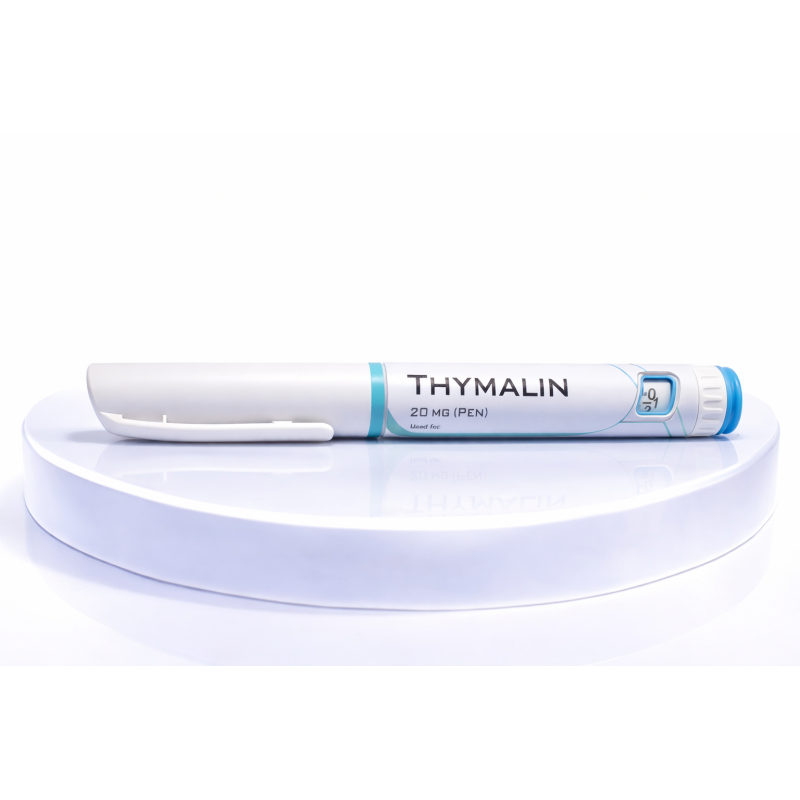
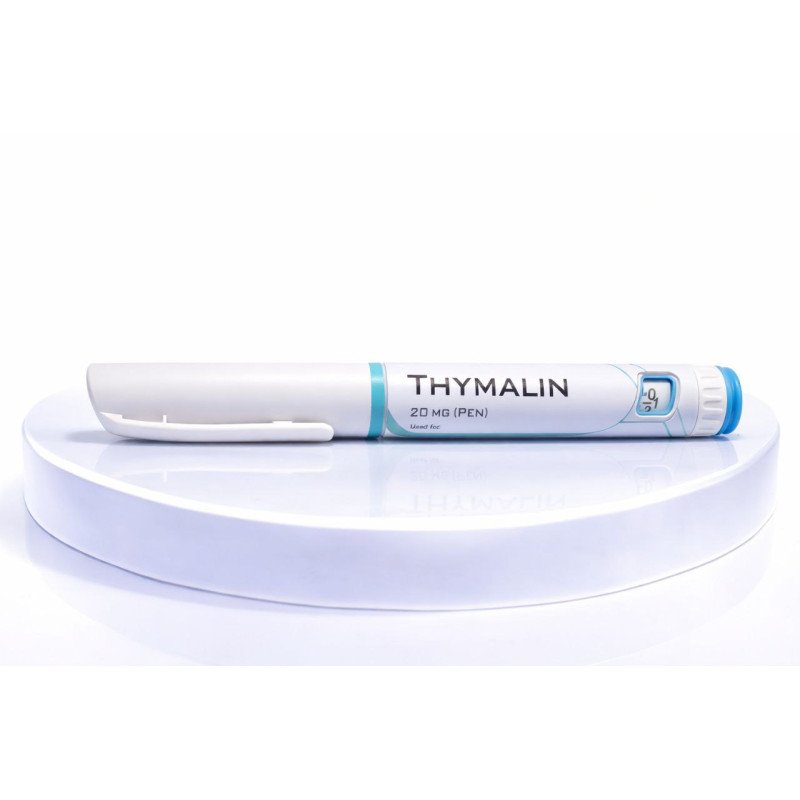
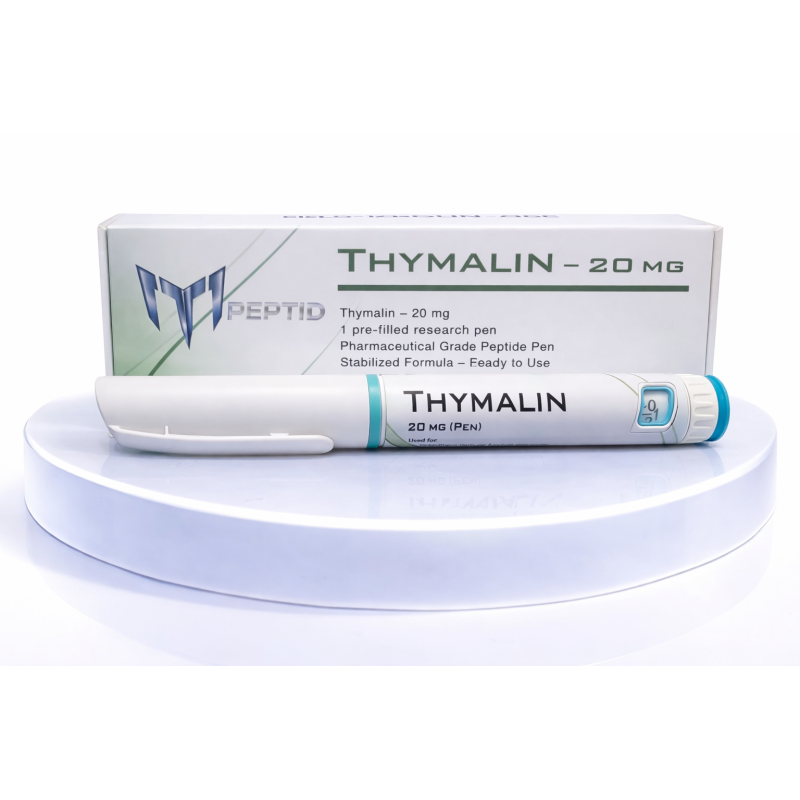


Thymalin modulates the immune response and stimulates cell regeneration. It is used in athletes under heavy training load and people under high physical stress, as well as for infections and injuries. It supports rapid recovery, resistance to infections, and the body's overall adaptation to exertion.
Thymalin supports a more balanced response to external and internal stressors, without acting as a direct stimulant or as a substitute for missing substances.
What is Thymalin?
It has been used as a bioregulatory peptide complex derived from thymus tissue, studied primarily in the context of immune homeostasis and restoration of T‑cell populations. A summary reference for origin and use is available on Wikipedia: Thymalin, and a broader context on thymic peptides and immune regulation is discussed in publications indexed in PubMed.
Mechanism of action
In experimental models, effects are tracked via changes in T‑cell subpopulations (e.g. CD3+, CD4+, CD8+), expression of activation markers and cytokine dynamics; designs often include before/after measurements and control of inflammatory mediators. The key practical value for laboratories is the ability to test immunomodulation without working with live thymus cells.
Clinical/preclinical data
| study name | population or experimental model | number of subjects or samples | duration | key observed outcomes |
|---|---|---|---|---|
| Publicly accessible summaries | Mixed clinical/experimental reports in secondary sources | Not consistently reported | Not consistently reported | No verifiable numerical endpoints available in open summaries |
At present, standardized, verifiable numerical results (e.g. mean changes in CD4/CD8, specific cytokine concentrations, p-values) are absent from freely available sources, so claims should be limited to mechanistic hypotheses and locally validated protocols.
Context of scientific use
Suitable for in vitro immunophenotyping, cytokine panels, stress/inflammation models and comparative tests with other thymus fractions; in a clinical setting it is considered only as a research reagent with no regulatory positioning from EMA or FDA for therapeutic use.
Pharmacokinetics
As a peptide complex, the expected rapid proteolytic degradation necessitates short sampling windows and inclusion of stabilization conditions in in vitro incubations; specific PK parameters are not uniformly published in open sources.
Purity and formula
Thymalin from MyPeptid is > 99% pure, which minimizes matrix interference in LC‑MS/ELISA and increases reproducibility in serial dilutions and control series.
Formula: C33H54N12O
Sold for educational and research purposes only; not intended for diagnostic or therapeutic use.