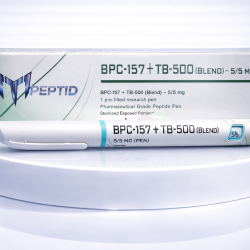
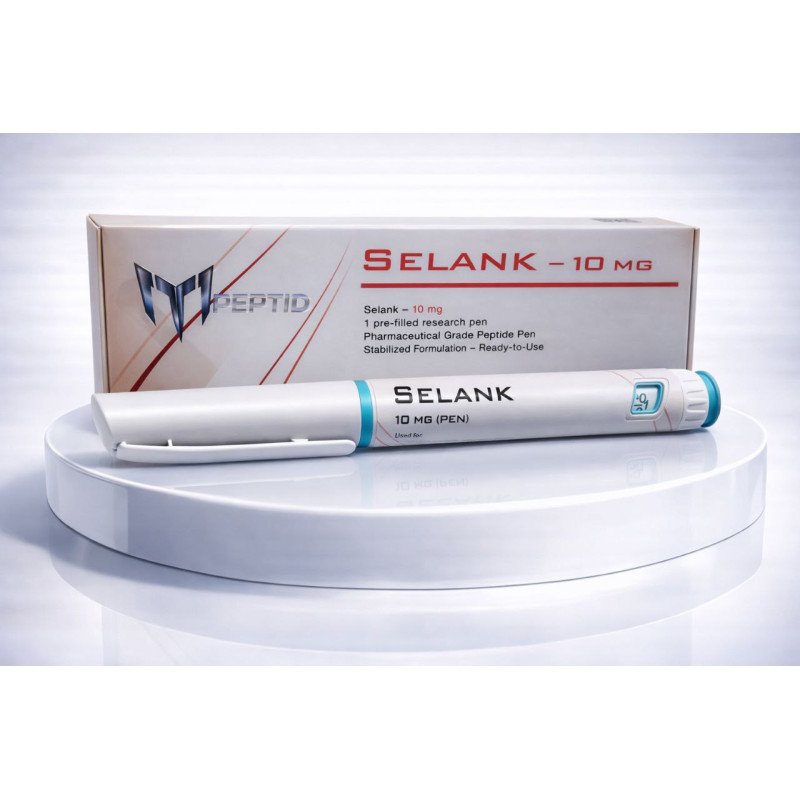
Selank helps the body respond more calmly to stress and tension, by supporting the balance between „accelerating“ and „calming“ processes in the brain and thus affects concentration and emotional resilience. In addition, it strengthens the immune system.
Selank influences the way the body responds to stress and helps support calmer and more stable behavior without acting as a strong "sedative".
As a molecular class it is regarded as a synthetic heptapeptide associated with neuropeptide signaling and with modulation of *GABAergic* and serotonergic pathways, described in the scientific literature as an anxiolytic nootropic agent for experimental models (general review: Wikipedia: Selank; review publications and PubMed entries: PubMed search).
Mechanism of action
Data suggest that Selank may influence the expression of genes and mediators associated with anxiety and stress-response, as well as modulate neurotransmitter systems (GABA/serotonin) and neuroinflammatory signals in preclinical contexts. The most important conceptual focus in experiment design is neuromodulation through multicomponent pathways, rather than a single receptor target. In practice this means planning panels of endpoints (behavioral tests, transcriptomics/ELISA, markers of neuroinflammation), instead of a single biomarker.
Use in laboratory and clinical settings
In the laboratory Selank is used for models of stress/anxiety, neuroimmune interactions and behavioral pharmacology; in the clinical setting outside regulatory approval (there is no FDA/EMA monograph for a medicinal product) use should be considered only as a scientific hypothesis, not an established therapy (regulatory context: FDA, EMA).
Pharmacokinetics
As a peptide, Selank is subject to proteolytic degradation; in experimental design plan for matrix stability, time series and vehicle/buffer controls, as well as analytical confirmation (HPLC/LC-MS) of identity and degradation products.
Purity and formula
Selank from MyPeptid provides conditions for reproducible testing, as it has purity over 99%, suitable for analytical and functional studies.
Chemical formula: C33H57N11O9
The product is sold for educational and research purposes only, not for human use.