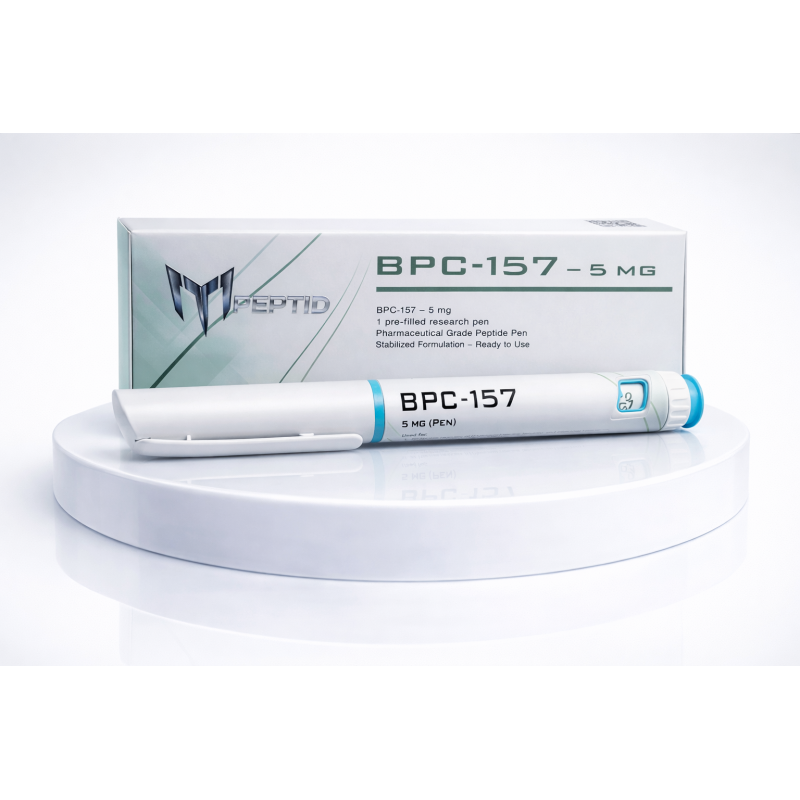
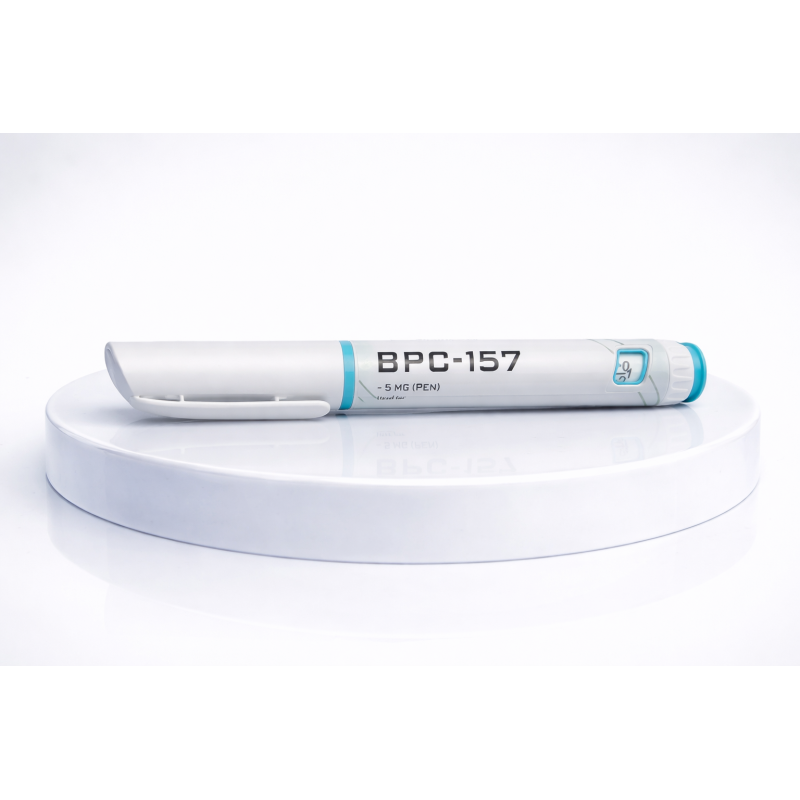
BPC-157 10mg – local recovery and protection

BPC-157 | Packaging: 10 mg, Primary purpose: Restoration of soft tissues, Secondary purpose: Digestive system support
New
BPC-157 | Packaging: 10 mg, Primary purpose: Restoration of soft tissues, Secondary purpose: Digestive system support
BPC-157 10mg – local recovery and protection

BPC-157 supports regeneration of tendons/ligaments and has a potential gastroprotective role. Useful for chronic irritation from high-volume training or heavy lifting. Helps maintain training frequency and technique without prolonged breaks. 

€ 45.00
Ex Tax: € 45.00
Secure and safe worldwide delivery! If the product is on stock - average delivery time is 2-3 days in Eastern Europe, 3-7 days in Western Europe and 1-3 weeks world wide!
Improved storage formula - increased stability and extended shelf life!
High-quality product! All peptides branded MyPeptid are produced in 100% laboratory conditions and have purity above 98%. Our products are tested at JINOSHIK, Analiza Białek and other independent, established laboratories with high standards!

What is BPC-157?

This peptide is being investigated as an agent that may support the body's natural processes of tissue and blood vessel repair by affecting how quickly and stably the body responds to damage.

Its association with key signaling pathway networks (including axes relevant to NO/endothelial function and VEGF-associated angiogenesis) places it among cytoprotective peptide fragments described as derivatives of “Body Protection Compound” from a gastric protein. In the literature it is regarded as a stable pentadecapeptide, used mainly in preclinical models to assess mucosal protection, tissue repair and vascular reactivity (see Wikipedia; review publications in PubMed).

Mechanism of action

Pleiotropic effects have been described on cell migration, extracellular matrix remodeling and endothelial response; modulation of NO signaling and interactions with growth factors such as VEGF are frequently discussed, which is relevant for healing and microcirculation models. Important: these mechanistic claims are derived primarily from animal/in vitro data and are not equivalent to clinical efficacy.

Clinical/preclinical data with numerical results

Published sources are often heterogeneous and do not provide standardized, comparable numerical endpoints; therefore a table of results is not included here to avoid unsupported generalization. To verify available records and details on models/doses/endpoints use a search on PubMed. At present BPC-157 is not approved as a medicinal product by regulatory authorities; regulatory context can be checked via FDA and EMA.

Context of scientific use: laboratory and clinical setting

In a B2B “research-only” environment it is used for in vitro experiments (endothelial/epithelial lines, wound-healing assays, barrier function) and in vivo protocols in animals, focusing on dose–response, choice of matrix/solvent and control of batch variability. In the clinical setting its use remains limited to research contexts, without status as routine therapy.

Pharmacokinetics

Systemic PK parameters in humans have not been established in public, high-quality clinical data; when planning experiments it is advisable to include pilot determination of stability, matrix effects and measurement time windows (e.g. LC–MS approaches), rather than extrapolating values from limited models.

Purity and formula

BPC-157 from MyPeptid is intended for controlled laboratory testing and analytical work, providing conditions for reproducibility thanks to a declared purity >99% (batch testing/certificate according to the supplier).

Formula: C62H98N16O22

For sale only for educational and research purposes (research-only), not for human use.

Similar