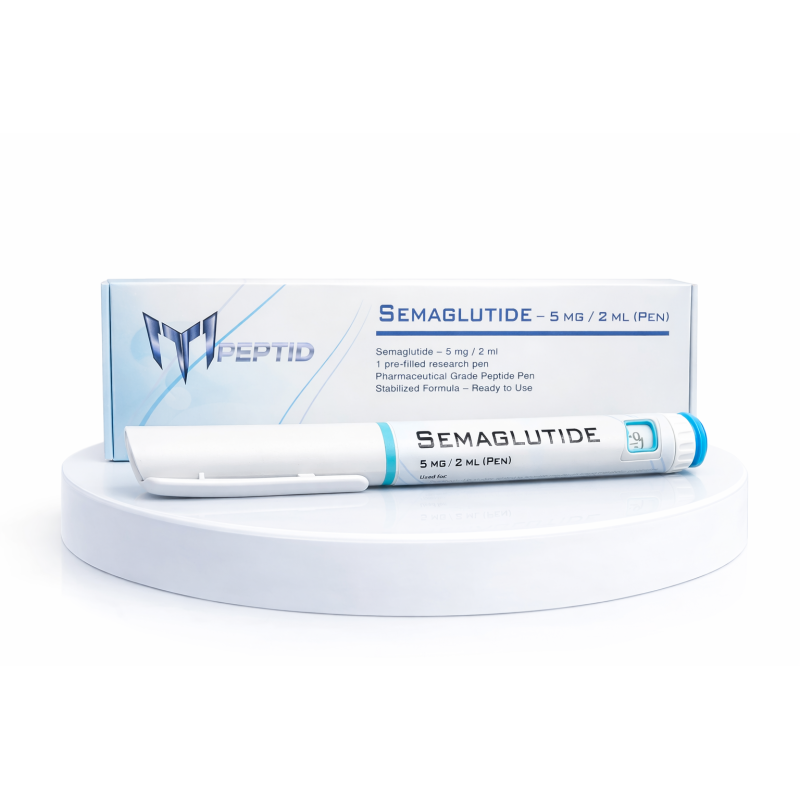
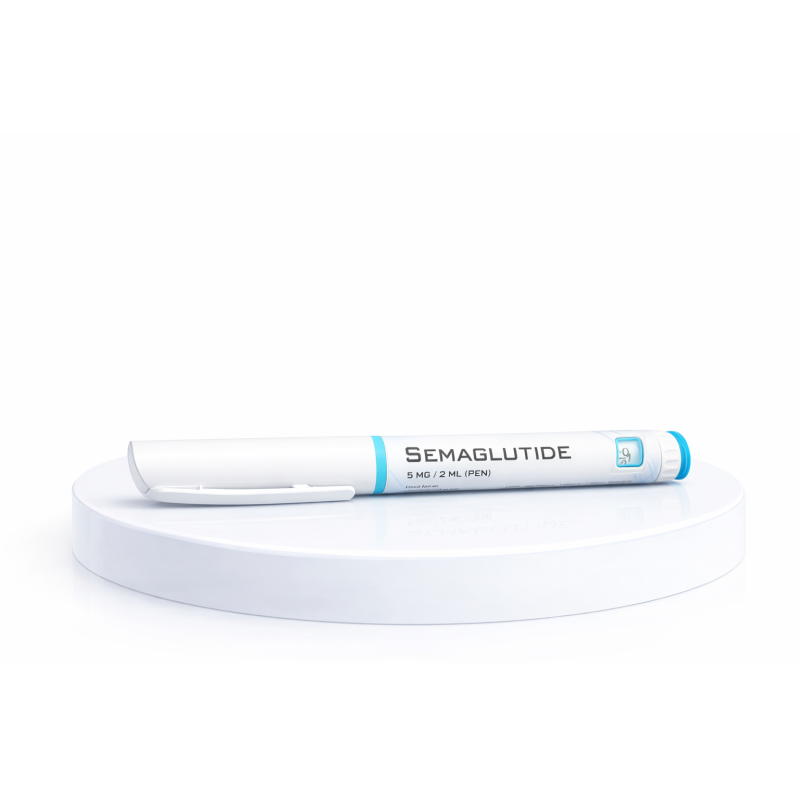


Semaglutide (often called Ozempic) helps the body control blood sugar levels and strongly affects appetite, thereby helping to reduce body weight and slim down.
- 0%
- 0%
- 0%
- 0%
- 0%
Report this review.
What is Semaglutide (Ozempic)?
This peptide helps the body reduce appetite and keep blood glucose more stable by causing the brain and digestion to “slow down the pace” after eating, resulting in less food intake.
Activation of GLP‑1 receptor-mediated signaling (class B GPCR) underlies the pharmacological profile, inducing a cAMP/PKA cascade and glucose-dependent insulin secretion, with suppression of glucagon and delayed gastric emptying. In practice this is a long-acting GLP‑1 receptor agonist, structurally modified for increased albumin binding and proteolytic stability; a summary of molecular characteristics and uses is available on Wikipedia, and regulatory details are in the FDA label (Ozempic).
Mechanism of action (for experimental design)
Key measurable effects: (1) enhancement of glucose-dependent insulin secretion from β-cells; (2) reduction of glucagon secretion; (3) central effects on satiety; (4) delayed gastrointestinal transit. Critical for in vitro models: receptor expression (GLP1R), second messengers (cAMP), and control of glucose concentration.
Clinical/preclinical data (numerical)
| study name | population or experimental model | number of subjects or samples | duration | key observed outcomes |
|---|---|---|---|---|
| SUSTAIN 6 | Adults with type 2 diabetes at high CV risk | 3297 | 104 weeks | Primary MACE: 6.6% (semaglutide) vs 8.9% (placebo); HbA1c change: −1.1%/−1.4% vs −0.4%; weight change: −3.6/−4.9 kg vs −0.7 kg |
The data were published in NEJM and are consistent with the regulatory summary in EMA EPAR (Ozempic).
Context of scientific use | laboratory and clinical setting
In the laboratory: GLP1R pharmacology (agonism/desensitization), β-cell lines, organoids, models of appetite/satiety, DMPK panels. In the clinical setting (as a reference molecule): class-effect comparisons among GLP‑1RA and validation of biomarkers (HbA1c, body weight, gastrointestinal motility).
Pharmacokinetics (relevant for design)
Suitable for once-weekly exposure protocols; the reported elimination half-life is approximately 1 week, which requires washout periods accounting for accumulation and the slow decline in concentration (see FDA label).
Purity and analytical suitability
Semaglutide from MyPeptid provides conditions for reproducible testing, being declared at a purity of >99% and suitable for analytical verification (HPLC/LC‑MS) and controlled biological experiments.
Formula: C187H291N45O59
For sale for educational and research purposes only (research-only); not intended for clinical use in humans.