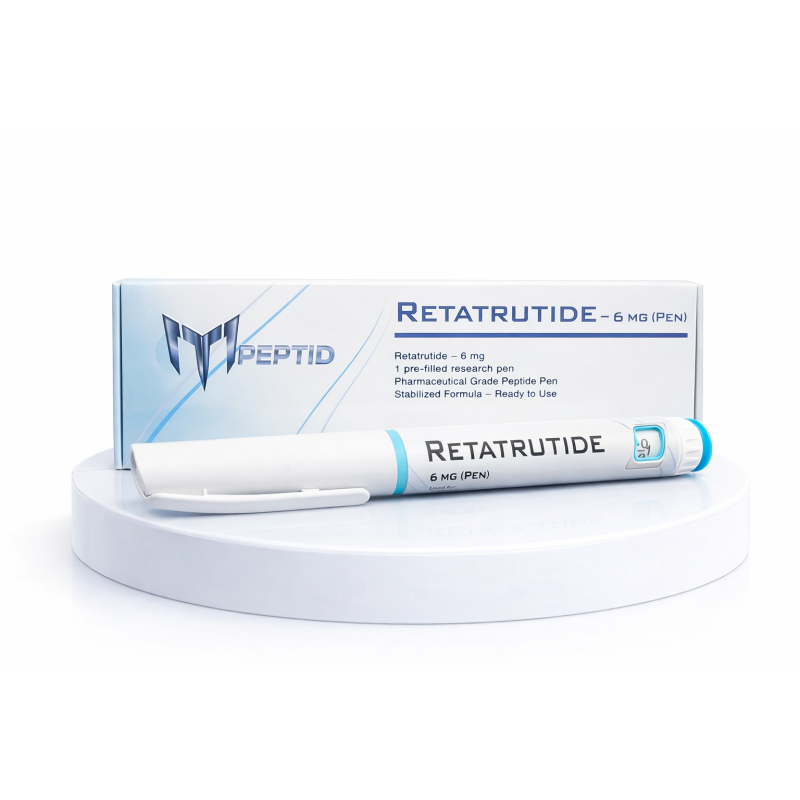
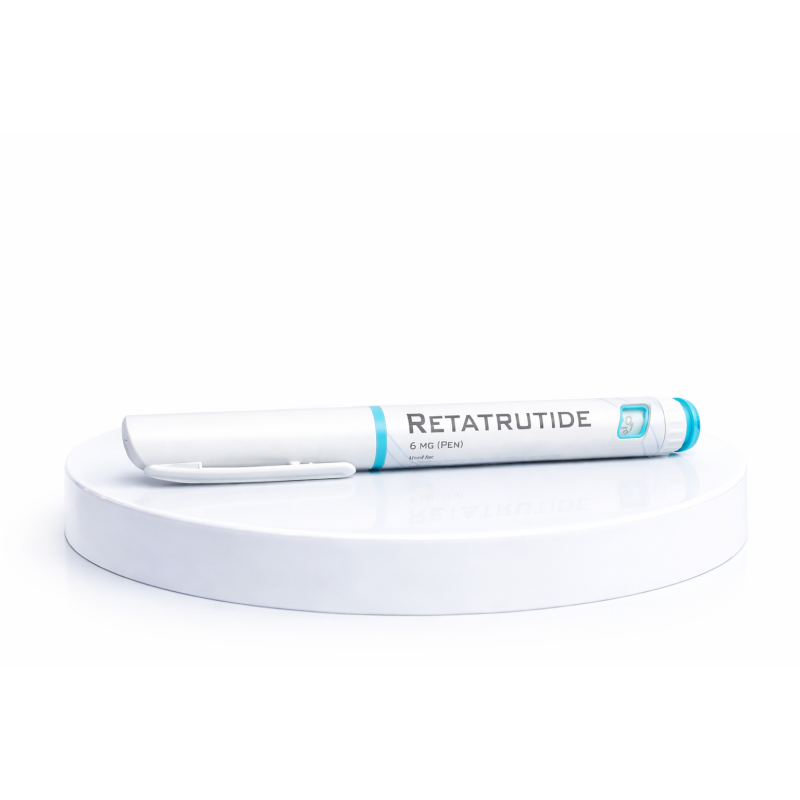


Retatrutide is a next-generation metabolic peptide with a combined mechanism (GLP-1/GIP/GCGR). It strongly controls appetite and lipolysis (fat breakdown), which makes it valuable for fat loss and preparation for competitions and events. It contributes to more stable energy levels and easier adherence to a diet. It is most effective when combined with structured strength training and sufficient protein intake.
What is Retatrutide (Retatrutide)?
This peptide simultaneously reduces the sensation of hunger, helps control blood glucose, and directs the body toward higher energy expenditure, which can result in a significant reduction in body weight in experimental and clinical settings.
The triple-agonist incretin signaling (GLP‑1R/GIPR/GCGR) defines the molecular class of the compound and explains why its effects encompass appetite, glycemia, and energy expenditure simultaneously; available public summary information can be reviewed on Wikipedia: Retatrutide.
Mechanism of action
Activation of GLP‑1R and GIPR modulates incretin-dependent regulation of glycemia and central satiety pathways, while agonism at GCGR can increase energy expenditure and lipid mobilization; the combination is considered a rational design for a stronger metabolic response compared with single/double agonists. For laboratory purposes this allows separate or combined testing of receptor-specific effects (e.g., using cell lines, cAMP reporter systems, and models of energy metabolism).
Clinical data
| study name | population or experimental model | number of subjects or samples | duration | key observed outcomes |
|---|---|---|---|---|
| Phase 2 (obesity) – публикувани резултати | Adults with overweight/obesity | 338 | 48 weeks | Mean change in body weight up to −24.2% (highest dose) versus −2.1% (placebo) |
Source for the numerical clinical data: The New England Journal of Medicine (publication on retatrutide in obesity). Additional context on clinical development and the mechanistic framework: PubMed (reviews/original articles on GLP‑1/GIP/glucagon triagonists).
Laboratory setting | clinical setting
In the laboratory, retatrutide is used to validate receptor selectivity/efficacy, compare triple-agonist versus dual-agonist incretin designs, and for pharmacodynamic markers (cAMP, transcriptional responses, metabolic fluxes). In the clinical setting it remains within controlled trials and protocols; it is not intended for routine use outside approved regulatory frameworks.
Pharmacokinetics
Publicly available details on human PK are limited and depend on the specific protocol; when planning experiments dosing is typically once weekly with serial sampling for concentration–time profiles, as well as parallel PD endpoints (glucose, insulin, weight/energy expenditure).
Purity and formula
Retatrutide from MyPeptid provides a reliable basis for analytical verification and bioactivity testing, as it is over 99% pure (HPLC) and suitable for standardized research protocols.
Formula: C225H348N48O68
Note: Offered for educational and research purposes only (research-only), not for diagnostic or therapeutic use.